Close Menu

    Ahead of Expected Judgment in Appeal, Civil Society Organizations Globally Call for the Release of Ahmed Douma

    11 July، 2026

    Prison Sentences Against Rached Ghannouchi and Ennahda Figures Signal an Escalating Crackdown on Rights and Freedoms in Tunisia

    6 June، 2026

    The Sentencing of Ahmed Douma Reflects Ongoing Restrictions on Freedom of Expression

    6 June، 2026
    Facebook X (Twitter) Instagram
    • المؤسسة العربية لدعم المجتمع المدني وحقوق الإنسان
    Facebook X (Twitter) Instagram Pinterest Vimeo
    المؤسسة العربية لدعم المجتمع المدني وحقوق الإنسانالمؤسسة العربية لدعم المجتمع المدني وحقوق الإنسان
    • News
      • Human rights institutions
      • Professional associations
    • Activities and seminars
    • Statement
    • Reports
    • Visions and ideas
    • Independent initiatives
    • Research and Publishing Unit
    • Foundation Programs
      • Observatory for the Right to Peaceful Assembly
      • Human Rights Defenders Program
      • Freedom of Opinion and Expression Program
      • Civil Society and Right to Organise Observatory Program
    • English
    المؤسسة العربية لدعم المجتمع المدني وحقوق الإنسانالمؤسسة العربية لدعم المجتمع المدني وحقوق الإنسان
    Home»News»Independent initiatives»A human rights report examines the reality of Egyptian labor within global supply chains.
    Independent initiatives

    A human rights report examines the reality of Egyptian labor within global supply chains.

    محرر الموقعBy محرر الموقع11 December، 2025No Comments1 Min Read
    Share Facebook Twitter Pinterest LinkedIn Tumblr Reddit Telegram Email
    Share
    Facebook Twitter LinkedIn Pinterest Email

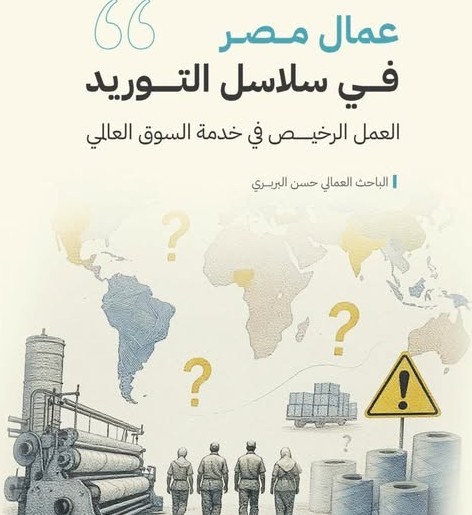
    In line with its focus on labor studies, the Trade Union Advisor Initiative recently published a report on the reality of Egyptian labor within global supply chains – prepared by labor researcher Hassan Barbari – with a focus on the spinning, weaving, and ready-made garment sector, which is one of the most labor-intensive sectors and the most closely linked to the international marke

    Through production and export networks linking Egyptian factories to dozens of global companies and brands, the report reveals how these factories have transformed into low-cost production bases serving global demand without providing the workers who operate them with even the most basic protection or fair wages.

    The findings show that nearly 70% of workers in the sector are employed on temporary or seasonal contracts, and that more than half are not covered by social security. Furthermore, approximately 90% of factories lack genuine union committees and effective collective bargaining mechanisms, such as worker representatives. This leaves workers without a voice or protection against management decisions or international buyers.

    Share. Facebook Twitter Pinterest LinkedIn Tumblr Email
    Previous ArticleThe government is oppressing unions and the middle class
    Next Article Egyptian activists, human rights advocates, and politicians launch a committee to defend prisoners of conscience.
    محرر الموقع

    Related Posts

    Independent initiatives

    Egyptian activists, human rights advocates, and politicians launch a committee to defend prisoners of conscience.

    11 December، 2025

    Annual Report of the Arab Foundation on Protests in 2025

    5 March، 202617 Views

    The Arab Foundation Calls for the Release of Detained Journalists in Cases Related to Freedom of Expression

    5 May، 202613 Views

    On World Suicide Prevention Day, the Arab Foundation reports 216 suicides in 2024 .

    10 September، 202513 Views
    Stay In Touch
    • Facebook
    • YouTube
    • TikTok
    • WhatsApp
    • Twitter
    • Instagram
    Facebook X (Twitter) Instagram
    • الرئيسية
    • News
    • Activities and seminars
    • Research and Publishing Unit
    2026 © Powered By Aab Foundation for Civil Society and Human Rights Support

    Type above and press Enter to search. Press Esc to cancel.