


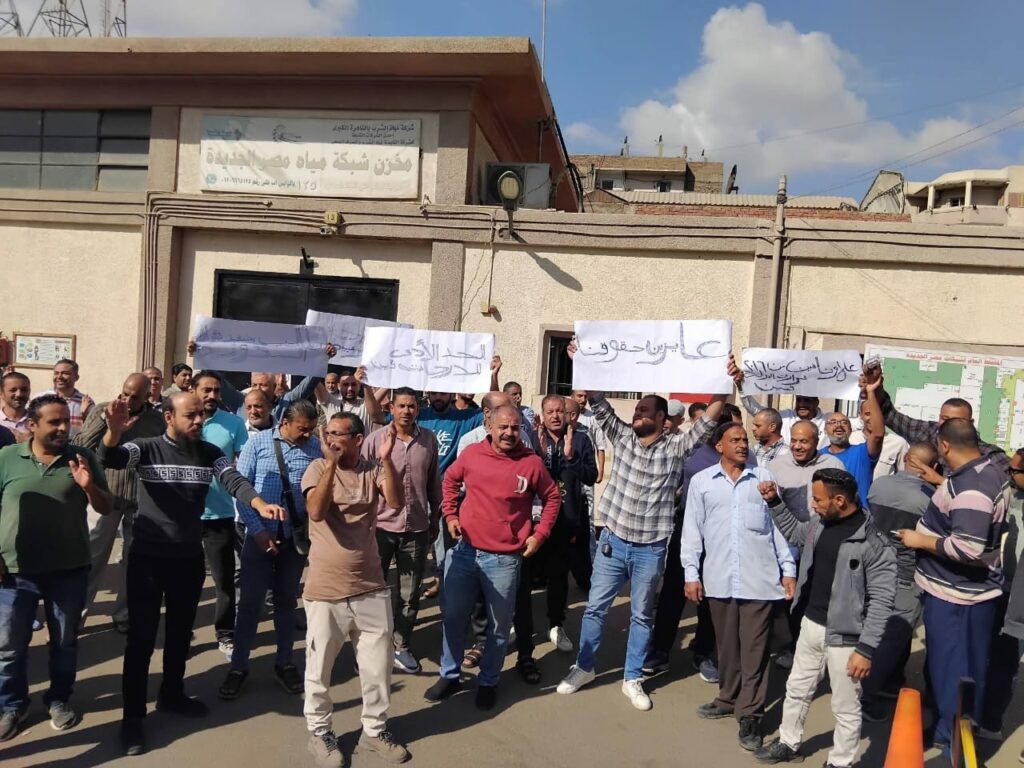
This report, issued jointly by the DAM Center for Support, Culture and Media and the Arab Foundation for the Support of Civil Society and Human Rights, monitors the scale of labor protests in Egypt during 2025. According to the report, workers organized 78 protests throughout the year. November recorded the highest number with 17 protests (21.79%), followed by December with 10 protests (12.82%), while September and October each witnessed 8 protests (10.25%).
The governorates of Cairo, Giza, Alexandria, Aswan, and Fayoum recorded the highest numbers of protests. Protest stand-ins were the most common form of labor action, followed by strikes and sit-ins, with protests taking place across 18 governorates.
The report notes a significant rise in labor protests compared to 2024, when only 38 protests were recorded, marking an increase of more than 100%. Protest methods varied, including demonstrations, work stoppages, sit-ins, complaints and appeals to authorities, creating Facebook pages, and even suicide attempts as a form of protest.
Protest stand-ins ranked first with 36 cases (46.15%), followed by 25 strikes (32.05%), while complaints and appeals to labor offices or ministries accounted for 9 cases (11.53%). Sit-ins came next with 6 cases (7.69%), while creating Facebook pages and suicide attempts were each recorded once (1.28%).
The report also highlights a clear increase in protests during the second half of the year, rising from 29 protests between January and June to 49 protests in the second half, reflecting worsening labor conditions.
Workers’ main demands focused on implementing the minimum wage, increasing salaries, job stabilization, and raising bonuses and meal allowances, which appeared in 46 protests (58%). These demands reflect the widening gap between wages and rising inflation and currency devaluation, alongside the failure of many employers—especially in the private sector—to apply the legally mandated minimum wage.
Other demands included payment of delayed wages and bonuses (15 cases, 19.23%), while protests against
salary cuts, layoffs, and forced resignations were recorded in 3 cases (3.84%).
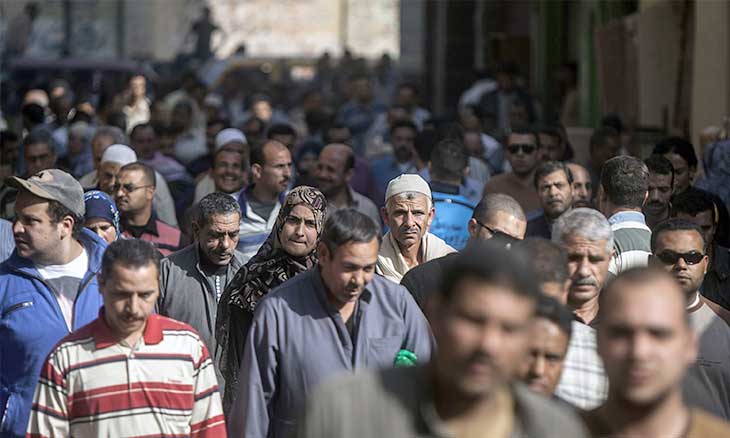
The report also highlights several key trends. Labor protests expanded geographically and sectorally, particularly among water and sanitation workers across multiple governorates such as Cairo, Alexandria, Sharqia, Giza, Beni Suef, and Minya. Similar patterns were observed among workers in Egypt’s integrated sugar industries, especially in Upper Egypt, with protests also involving sugarcane farmers affected by company policies.
Upper Egypt saw a notable rise in protests, particularly in Fayoum, Qena, and Aswan, which ranked second after Greater Cairo with 19 protests. Aswan recorded 7 protests, Fayoum 5, and Qena 3.
Protests also spread across 19 different economic sectors. The water and sanitation sector recorded the highest number with 16 protests, followed by the textile and garment sector with 9 protests, and an equal number among workers in sugar industry companies affiliated with the state-owned food industries holding company.
The media and journalism sector witnessed 7 protests, including actions by temporary employees in state-owned media institutions and workers in party-affiliated and private outlets such as Al-Wafd newspaper and Al-Bawaba News. The ceramics and sanitary ware sector recorded 6 protests, while the food sector registered 4 protests.
The report also notes growing labor unrest in other sectors including electricity, banking, petroleum, food industries, gas companies, pharmaceuticals, housing and construction, security and services, sports, shipbuilding, furniture manufacturing, and telecommunications.
